Introduction to MEP BIM for HVAC Systems
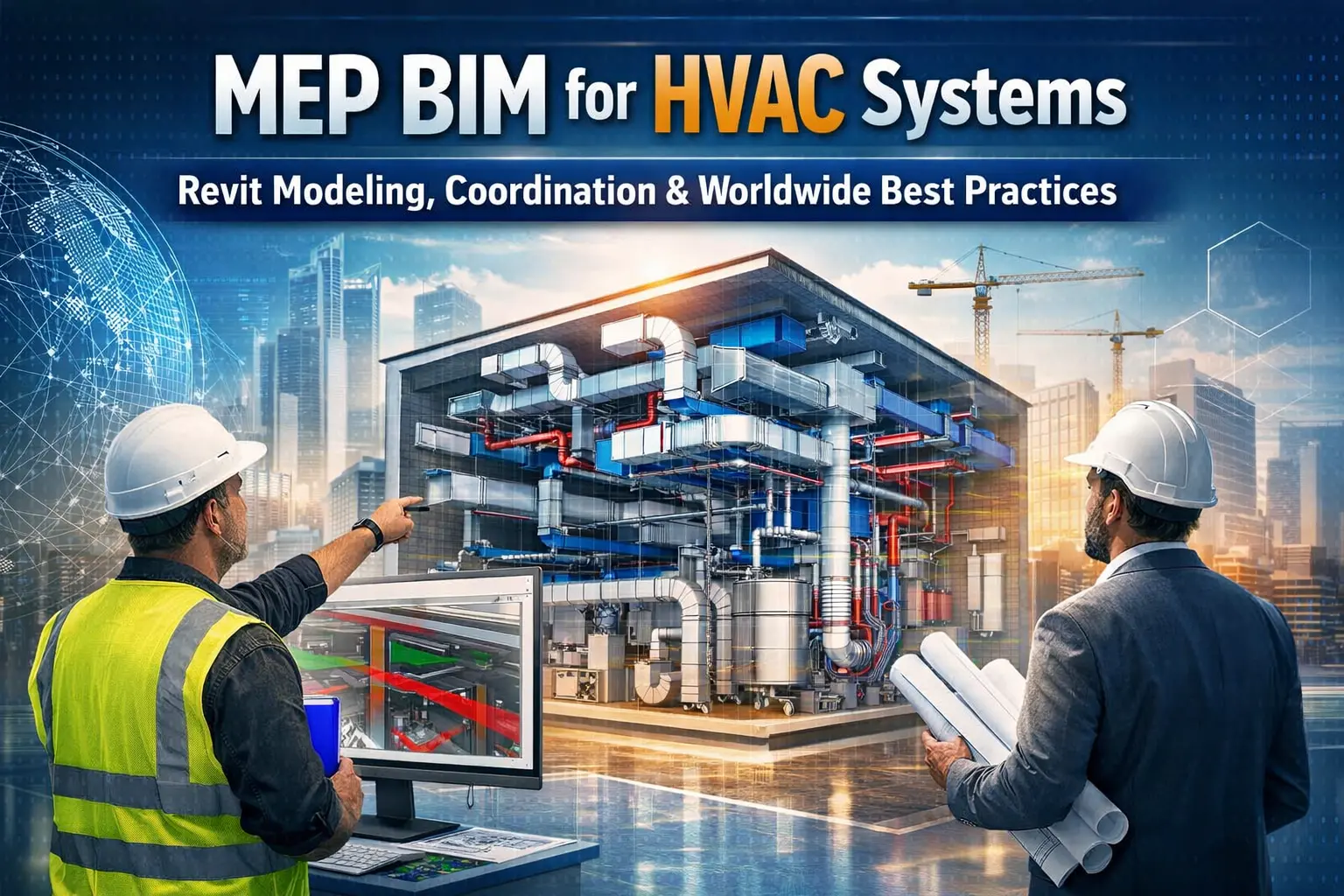
Mechanical, Electrical, and Plumbing (MEP) Building Information Modeling (BIM) has transformed how HVAC systems are designed, coordinated, and constructed across the globe. Among all MEP disciplines, HVAC systems benefit the most from BIM due to their spatial complexity, coordination requirements, and impact on building performance.
Today, architects, HVAC engineers, and contractors worldwide rely on MEP BIM for HVAC systems to reduce clashes, improve constructability, and deliver more accurate and efficient projects. Revit has become the industry-standard platform for HVAC BIM modeling, enabling intelligent 3D models that support design, coordination, fabrication, and facility management.
This complete guide explains how HVAC BIM modeling works, why Revit is the preferred tool, and what global best practices ensure successful project delivery.
What Is HVAC BIM Modeling?
HVAC BIM modeling is the process of creating intelligent 3D digital models of heating, ventilation, and air-conditioning systems using BIM software such as Autodesk Revit.
Unlike traditional 2D CAD drawings, HVAC BIM models contain:
- Geometry (size, shape, and location)
- System intelligence (airflow, capacity, connections)
- Project data (equipment information, parameters, metadata)
Key HVAC Components Modeled in BIM
- Ductwork and fittings
- Chilled water, hot water, and refrigerant piping
- Air handling units (AHUs), fan coil units (FCUs), chillers, VRF systems
- Dampers, diffusers, grilles, and insulation
- Equipment clearances and maintenance zones
HVAC BIM models act as a single source of truth, supporting all project stakeholders from concept design to construction and handover.
Why Revit Is the Preferred Platform for HVAC BIM
Revit is the most widely used software for HVAC BIM modeling due to its parametric, system-based approach.
Key Advantages of Revit for HVAC Systems
- System intelligence: Automatically connects ducts and equipment
- Parametric families: Easily update sizes and specifications
- Multi-discipline coordination: Integrates architecture, structure, and MEP
- Data-rich models: Supports schedules, quantities, and analysis
- Compatibility: Works seamlessly with coordination and clash detection tools
For global projects, Revit ensures consistent modeling standards and collaboration across teams and time zones.
Global BIM Standards and Guidelines for HVAC Modeling
HVAC BIM modeling follows international and regional BIM standards to ensure consistency, accuracy, and collaboration.
Common Global BIM Standards
- ISO 19650 – International BIM information management standard
- National BIM mandates (UK, USA, EU, Middle East, Asia-Pacific)
- Project-specific BIM Execution Plans (BEP)
Why Standards Matter
- Clear modeling responsibilities
- Consistent naming conventions and parameters
- Improved coordination between global teams
- Reduced rework and misunderstandings
Following standards is essential for scalable, repeatable HVAC BIM workflows.
Level of Development (LOD) in HVAC BIM Modeling
LOD defines how detailed and accurate an HVAC BIM model is at each project stage.
LOD 300 – Design Development
- General routing of ducts and pipes
- Equipment sizes and approximate locations
- Used for design coordination and approvals
LOD 400 – Fabrication & Construction
- Fabrication-level ductwork and piping
- Accurate dimensions, fittings, and connections
- Used for shop drawings and prefabrication
LOD 500 – As-Built Models
- Verified on-site installation conditions
- Asset data for facility management
- Used for operations and maintenance
Choosing the right LOD ensures efficiency and avoids over- or under-modeling.
[Read More: LOD 300 vs LOD 400 vs LOD 500 in BIM]
Revit HVAC Modeling Workflow – Step by Step
A structured workflow is critical for accurate HVAC BIM delivery.
Typical HVAC BIM Workflow
- Review architectural and structural backgrounds
- Set up Revit project standards and worksets
- Load approved HVAC families and templates
- Place HVAC equipment with correct parameters
- Route ducts and pipes with system logic
- Apply slopes, clearances, and access zones
- Validate systems and perform quality checks
A consistent workflow improves model quality and coordination success.
HVAC Coordination Using MEP BIM
HVAC coordination ensures that mechanical systems fit seamlessly with architecture, structure, electrical, and plumbing services.
Common Coordination Challenges
- Congested ceiling spaces
- Conflicts with beams, columns, and slabs
- Overlapping services in plant rooms
BIM enables early identification of these issues before construction begins, reducing costly site rework.
Clash Detection for HVAC Systems
Clash detection is one of the most valuable benefits of HVAC BIM.
Common HVAC Clashes
- Ducts vs structural beams
- Pipes vs electrical trays
- Equipment clearance conflicts
Benefits of Clash Detection
- Fewer RFIs
- Reduced installation delays
- Better coordination between trades
Clash-free HVAC models lead to smoother construction workflows and predictable outcomes.
HVAC BIM for Architects – Design & Space Planning Benefits
Architects benefit significantly from HVAC BIM integration.
Key Benefits for Architects
- Better ceiling and service zone planning
- Early visibility of system impact on design
- Improved aesthetics and spatial coordination
- Faster design decision-making
HVAC BIM for Contractors – Construction & Cost Benefits
For contractors, HVAC BIM directly impacts productivity and profitability.
Contractor Benefits
- Accurate quantity take-offs
- Reduced rework and material waste
- Improved installation sequencing
- Support for prefabrication and modular construction
HVAC Shop Drawings and Fabrication Models
LOD 400 HVAC BIM models form the basis of shop drawings.
Shop Drawing Benefits
- Fabrication-ready duct and pipe layouts
- Accurate fitting details
- Improved coordination with fabrication software
HVAC BIM Deliverables Across Project Phases
- Design development models
- Coordination and clash-free models
- Shop drawings and fabrication models
- As-built BIM models
- Asset data for facility management
Best Practices for HVAC BIM Modeling (Worldwide)
- Follow project BIM standards and BEP
- Maintain clean and lightweight models
- Use consistent naming and parameters
- Conduct regular coordination meetings
- Implement strong quality control processes
Common HVAC BIM Challenges and How to Overcome Them
Typical Challenges
- Incomplete design information
- Frequent revisions
- Coordination delays
- Model performance issues
Solutions
- Early stakeholder involvement
- Clear modeling scopes
- Regular model audits
- Dedicated BIM coordination teams
Future Trends in HVAC BIM Modeling
- AI-assisted clash detection
- Automated modeling workflows
- Digital twins for HVAC systems
- Integration with energy analysis and sustainability tools
How MEP BIM Services Support Global HVAC Projects
- Architects refine HVAC design coordination
- Contractors execute accurate installation
- Global teams collaborate efficiently
[Read More: Outsourcing HVAC Modeling Services: Cost-Smart Guide for US Contractors]
How BuiltInBIM Helps You with HVAC MEP BIM Expertise
BuiltInBIM supports architects, HVAC engineers, and contractors worldwide by delivering accurate, coordination-ready, and construction-focused MEP BIM models tailored to project requirements.
With deep expertise in HVAC Revit modeling, MEP coordination, and clash detection, BuiltInBIM helps project teams reduce design conflicts, improve constructability, and achieve smoother execution across all project stages.
BuiltInBIM’s HVAC BIM Capabilities Include:
- Revit-based HVAC BIM modeling (LOD 300, 400, and 500)
- Multi-discipline MEP coordination and clash-free models
- HVAC shop drawings and fabrication-ready models
- Support for global BIM standards and project-specific BEPs
- Scalable BIM teams for fast-track and complex projects
By combining technical accuracy, industry best practices, and real-world construction knowledge, BuiltInBIM ensures HVAC systems are modeled not just for design—but for efficient installation and long-term performance.
Whether supporting early-stage design coordination or delivering fabrication-level HVAC BIM models, BuiltInBIM acts as a reliable BIM partner for projects across commercial, residential, healthcare, and industrial sectors.